



Himeji Castle
Himeji Castle is a famous cherry blossom spot that has been selected as one of the "100 Best Cherry Blossom Spots." At night, you can enjoy the illuminated Himeji Castle and cherry blossoms.
 Port of Kobe
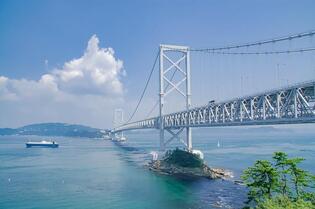
 Akashi Kaikyo Bridge
 Nankinmachi Chinatown
In Hyogo, where you can enjoy outdoor baths and beautiful scenery, you can visit Kinosaki Onsen and Arima Onsen, see the exotic streets of Kobe, the night view from Mt. Rokko, and the Akashi Kaikyo Bridge, the longest suspension bridge in the world that stretches to Awaji Island. Himeji Castle, the first Japanese site to be registered as a World Heritage Site, is also famous.
In spring, Hyogo Prefecture has many spots where you can enjoy cherry blossoms and seasonal flowers. In particular, Himeji Castle and the Ono Sakura Dzutsumi Corridor Cherry Blossoms attract many visitors from both within Japan and overseas, seeking out the magnificent views.
Himeji Castle is a famous cherry blossom spot that has been selected as one of the "100 Best Cherry Blossom Spots." At night, you can enjoy the illuminated Himeji Castle and cherry blossoms.

Awaji Hanasajiki spreads out on a plateau overlooking the sea. Every year from March to April, the garden is decorated with rape blossoms and linaria, creating a scene representative of spring.

One of the largest herb gardens in Japan. In spring, the flowers and herbs bloom in full glory, coloring the gardens at their most gorgeous, and there are many events held.

The largest row of cherry blossom trees in western Japan is like an endless tunnel of cherry blossoms. The "Obe upside-down cherry blossoms" reflected in the rice paddies also captivate visitors.

This popular zoo in Kobe allows you to interact with a variety of animals. Come and create special memories in the spring weather.
Hyogo is full of fun events and experiences that will blow away the summer heat. Recommended spots include the aquarium where you can have a unique experience, Awaji Island, and Hanshin Koshien Stadium, where summer-only events are held.

Akashi Kaikyo Park, famous for its sunflowers, will be hosting a summer-only event decorated with colorful umbrellas. Don't miss the sunsets of Awaji Island, which has been selected as one of the 100 best sunsets in Japan.

If you want to see one of the world's largest suspension bridges up close, we recommend Okura Beach. You can enjoy swimming and BBQs while admiring the beautiful bridge.

The summer event held every year by the Hanshin Tigers is packed with fun activities, including limited edition goods, beer gardens, and gourmet food.

This theme park-style aquarium offers unique experiences such as shows featuring marine animals, feeding the fish, and horse mackerel fishing.

It's an urban beach that's easy to enjoy, with excellent access from the Keihanshin area and close to train stations. In the summer, many beach huts line the streets, creating a lively and energetic atmosphere.
Kobe, a city filled with exotic atmosphere, is full of autumn events. At Kitano Ijinkan and Kobe Motomachi Shopping Street, jazz and other music events and Halloween events are in full swing.

Every autumn, a sea of clouds appears in the surrounding area. The fantastic sight of the area enveloped in the sea of clouds is so spectacular that it is called "Japan's Machu Picchu."

This area is lined with beautiful foreign mansions. Every autumn, a jazz event is held, and the sounds of jazz echo through the exotic atmosphere of the town.

Mt. Rokko, which attracts visitors with its magnificent nature, offers spectacular views of colorful autumn leaves. The view from the Rokko-Arima Ropeway is also exceptional.

You can also enjoy the autumn leaves in the park, which is home to the Genbudo Cave, which was formed approximately 1.6 million years ago. Come and enjoy the mystery and beauty of nature.

This cute retro shopping street is packed with autumn events such as music and Halloween, and the excitement is growing every year.
Winter in Hyogo is all about illuminations. The beautiful light art of Kobe Luminarie and Meriken Park continues to fascinate many people, from locals to tourists.

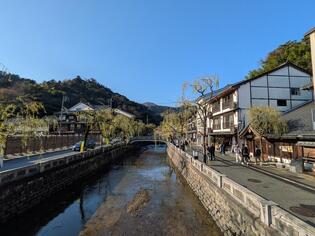
After enjoying the king of winter delicacies, Matsuba crab, and local sake, you can enjoy the snowy scenery in the open-air bath. Winter is the best season to visit Kinosaki Onsen.

Meriken Park is home to many photogenic landmarks. In the winter, illumination events are held and the park is decorated with beautiful lights.

In December, the Lantern Fair takes place, where Nankinmachi is enveloped in the light of lanterns, and in February, the Chinese New Year Festival is held to celebrate the New Year on the lunar calendar, making the area bustling with energy.

The area offers a variety of spectacular winter views, including the beautiful snow-covered hot spring towns, the sparkling frost seen from the Rokko-Arima Ropeway, and the frozen waterfalls of Mount Rokko.

With one of the largest ski slopes in the Kansai region and abundant snow, there are a variety of courses that can be enjoyed by skiers of all levels, from beginners to experts, so you can fully enjoy winter sports.

Himeji City
Himeji Castle is one of Japan's most famous castles, and was the first in Japan to be registered as a World Heritage Site along with Horyu-ji Temple in 1993. It is affectionately known as the "White Heron Castle" due to its white plaster walls and graceful appearance. Himeji Castle has several small routes, including one that goes directly to the main castle tower. On the Nishinomaru route, which goes around the Nishinomaru and Kessho-yagura turrets, you can visit places related to Senhime. The Okiku-ido route, which goes around the legendary Okiku-ido well, is also popular. The Hishi-no-mon Gate, the entrance to the Ninomaru, was named after the carved diamond crest on the crown of both pillars. The entire gate retains the style of the Azuchi-Momoyama period, and it is the largest gate in the castle. Himeji Castle is a world-famous cultural heritage that embodies Japan's history and traditional beauty. It continues to fascinate many people even today, more than 400 years later.
Learn more
Kobe City
Arima Onsen is a historic hot spring area and is counted among Japan's "Three Ancient Hot Springs and Three Famous Springs." Located at the foot of Momijidani on the north side of the Rokko Mountains, the hot spring town is surrounded by mountains and has been loved as the "Kansai's inner sanctum" where you can enjoy an atmosphere isolated from the hustle and bustle of the city. Arima Onsen is characterized by its two types of spring quality: gold spring and silver spring. Gold spring is brown in color due to its high iron content, while silver spring is colorless and transparent due to its high sodium bicarbonate content. This unique spring quality has made it famous as a hot spring resort since ancient times. There are many power spots and souvenir shops in the hot spring town, so you can enjoy not only the hot springs but also strolling and shopping. Shuttle buses for inns and hotels are available from Kobe Electric Railway Arima Onsen Station, so you can easily visit the area for both overnight stays and day trips.
Learn more
Toyooka City
This is a historic hot spring resort famous for its outdoor baths. The outdoor baths here refer to public baths, and are loved as special places to soothe the fatigue of travel. This hot spring resort, which has a long history of 1,300 years, is said to have been discovered by the monk Dochi, and its beginnings were the miraculous Mandala-yu. Kinosaki is dotted with a variety of outdoor baths, each with its own story, and each has its own atmosphere and characteristics of the water. In particular, Ko-no-yu is known for its blessings of marital harmony and eternal youth and longevity, and is known for the hot springs where a legend remains of a stork that injured its leg being healed in the hot springs. Meanwhile, Mandala-yu is loved by people who pray for prosperous business and bountiful harvests, and from its open-air bath you can enjoy the view of the natural beauty of the mountain behind it.
Learn more
Kobe City
Located in Kobe's Chuo Ward, this Chinatown is full of exotic atmosphere. It is one of the three largest Chinatowns in Japan, along with Yokohama Chinatown and Nagasaki Shinchi Chinatown. A wide variety of stores selling Chinese ingredients, miscellaneous goods, and cuisine are lined up in an area of about 270 meters east to west and 110 meters north to south, creating an atmosphere like a theme park. Various events are held in Nankinmachi throughout the year. At the Spring Festival, which celebrates the Chinese New Year, the lunar New Year, firecrackers ring out and dragons and lions, which are indispensable for celebrations, dance. This festival is unique to Nankinmachi, where you can fully experience the traditional atmosphere of China. Nankinmachi is not only a place where you can taste authentic Chinese cuisine and ingredients, but also a place where you can experience the charm of Chinese culture through traditional festivals and events.
Learn more
Kobe City
This large shopping area is located in an open area that is typical of Kobe's port city, and has over 200 stores offering a wide variety of fashion, gourmet food, and miscellaneous goods. It is a complex that represents Kobe, proposing an urban lifestyle. In a space surrounded by sparkling sea, refreshing sea breezes, and greenery, there are not only stores where you can enjoy shopping and gourmet food, but also a cinema and amusement space. Just strolling around while looking at the sea is enough to fully experience the atmosphere of "Kobe, the port city". On weekends, "handmade markets" and "marches" are also held, where you can purchase works by local creators and fresh ingredients. At night, the entire area is beautifully lit up and illuminated, creating a fantastic look that is different from the daytime.
Learn more
Kobe City
It is a mountain range located from the west to the north of Kobe city and is counted as one of the 300 famous mountains in Japan. The mountain range belongs to Kobe city, Ashiya city, Nishinomiya city, and Takarazuka city, and there are many fun tourist facilities on the mountain such as Mt. Rokko Ranch, Rokko Garden Terrace, and Mt. Rokko Country House. Mt. Rokko is full of charms in every season. In spring, you can feel the pleasant spring breeze, birds singing, and spring flavors with all your senses at Rokko Alpine Botanical Garden and Rokko Garden Terrace. In summer, we recommend trying out the various athletics that both adults and children can enjoy at Mt. Rokko Athletic Park GREENIA. In autumn, you can enjoy gourmet food and sweets made with autumn ingredients while touching contemporary art works at Tenrandai TENRAN CAFE and ROKKO Forest Sound Museum. In winter, you can enjoy skiing and snowboarding close to the city center, and the air is clear, making the view and night view the most beautiful.
Learn more
Toyooka City
This castle town in the northern part of Toyooka City, Hyogo Prefecture, is a place where you can feel the history and culture from the Edo period to the Meiji and Taisho periods. Strolling through this town, designated as a nationally important preservation district for groups of traditional buildings, will make you feel as if you have traveled back in time. Historical buildings are scattered throughout the area, including the remains of Izushi Castle, a sake brewery, the second oldest Shinko Tower in Japan, and the Izushi Eirakukan, the oldest theater in the Kinki region. The charm of Izushi is that you can encounter the atmosphere of a different era every time you turn a corner. Izushi is also known as the production area of Izushi ware, a traditional craft that has been around since the Edo period. In 1980, it was designated a national traditional craft. Izushi Eirakukan is the oldest theater in the Kinki region, built in the Meiji period. It is the biggest event in Izushi, and it hosts Eirakukan Kabuki, a comedy hall, and various stage performances, attracting approximately 40,000 visitors.
Learn more
Toyooka City
The rock layer was formed when lava erupted from the eruption of Mt. Futami about 1.6 million years ago and cooled, and the columnar rock wall was exposed about 6,000 years ago. It is characterized by a streamlined pattern that changes from vertical to horizontal, with hexagonal rocks piled up on top of each other. Genbudo is also an important geological spot, and in 1926, a doctor from Kyoto Imperial University discovered that the magnetic direction of the stones in this area faces south, opposite to the current direction. It was the first time in the world that it was announced that there was a time when the Earth's magnetic field was reversed. It was selected as one of the world's "100 Geological Heritage Sites" in 2022. Genbudo Park is a major natural heritage site of the San'in Coast UNESCO Global Geopark. There are five caves in the park: Genbudo Cave and Seiryu Cave, which are designated as national natural monuments, as well as Byakko Cave, Minami Suzaku Cave, and Kita Suzaku Cave.
Learn more
Asago City
This is a historic silver mine that supported the modernization of Japan. Full-scale mining began during the Muromachi period, and during the Sengoku period, it came under the direct control of Nobunaga Oda and Hideyoshi Toyotomi. During the Meiji period, it became Japan's first government-run mine, aiming to establish a model mine and oreworks for modern mining. It was later sold to Mitsubishi Limited Partnership Company, and operated as one of the largest mines in the country, but closed in 1973. It is now open to the public as a tourist facility, with a total tunnel length of over 350 km and a depth of 880 m. In the modern tunnel, the Kanagase Pit, motorized puppets are used to recreate the working conditions inside the mine. In addition, at the Ikuno Silver Mine Culture Museum, you can see pure silver ingots and silver ore with a purity of 99.99%.
Learn more
Asago City
Also known as the "Machu Picchu of Japan," this famous castle has been selected as one of Japan's 100 Great Castles. Although no buildings remain today, the original stone walls have been preserved in their original form, allowing visitors to enjoy the majestic scenery that evokes history. Particularly popular is the fantastic sea of clouds that appears in the early mornings of late autumn; when you look down from the summit at the town of Takeda at the foot of the mountain, the ruins of Takeda Castle, enveloped in a sea of clouds, look like a castle floating in the sky. The ruins of Takeda Castle are also known as "Tiger Lying Castle," a name given to the fact that the ruins resemble a lying tiger. The castle has also been recognized as a sacred place for lovers, making it a popular spot for young couples seeking a romantic atmosphere.
Learn more
Toyooka City
This is a valuable facility where you can observe the endangered Oriental white storks up close. This is the last habitat for storks in Japan, where wild storks became extinct in 1971, and efforts are currently being made to protect, increase their numbers, and return them to the wild. Within the park, there is an education and research zone that exhibits the ecology of the birds, which can be observed at any time. From the mountaintop gazebo observation zone, you can get a panoramic view of the park and the interior of the Shounji temple tower from above. From spring to summer, you can see chicks and their parenting, and in the dome-shaped cage nature zone, you can observe a breeding pair of Oriental white storks up close.
Learn more
Ako City
This is the remains of an Edo period castle in Ako City, Hyogo Prefecture. Naganao Asano, who came to the castle from Kasama in 1645, ordered Kondo Saburozaemon Masazumi to design the castle, which was completed in 1661. After three generations of the Asano family, it was cut off due to a sword fight, and it became the castle of the Nagai and Mori families. The castle is large, with 10 corner turrets, 12 gates, and a total length of 2,847m. Ako Castle is a relatively new Edo period castle, but it is characterized by its war-conscious design backed by Koshu-ryu military science. This consciousness can be seen everywhere in the facilities and stone walls within the castle, which is a highlight. The ruins of Ako Castle, where you can feel the history and strategy, are an attractive spot that even non-history buffs will want to visit.
Learn more
Takarazuka City
Easily accessible from major cities in the Kansai region, Takarazuka is a city brimming with diverse attractions. From unique Japanese art to historical shrines and temples, hot springs, and activities, it offers a wide range of ways to have fun. When you think of Takarazuka, the first thing that comes to mind is the "Takarazuka Revue." The glamorous stage, woven together by "male roles" and "female roles" composed entirely of women, is truly a world of dreams. It is also the city where Osamu Tezuka, known as the "God of Manga," spent his childhood. The "Osamu Tezuka Memorial Museum" recreates the world of Tezuka's works, including "Astro Boy," and displays items related to him. Historic shrines and temples are also worth seeing. "Kiyoshikojin Seichoji Temple," founded in 896, is revered as the god of fire and the god of the hearth. Restaurants and souvenir shops line the approach to the temple, and there is also the Tessai Museum Annex, the "Historical Materials Museum," on the temple grounds.
Learn more
Akashi City
Akashi is a city rich in nature facing the Seto Inland Sea, and Akashi Strait is especially known as a rich fishing ground. The fast currents allow fish to grow with firm flesh, and fish caught in the morning at the auction market called "hiruami" are delivered to restaurants by noon, so you can enjoy very fresh seafood. Akashi's representative specialty is "Akashiyaki (tamagoyaki)". It is basically eaten with dashi soup, and is so popular that there are about 70 specialty stores in the city. Akashi is also a city with ties to historical figures. It is said that Musashi Miyamoto laid out the town of Akashi, and many historical sites remain in the city, such as a stone monument with a poem left by Kakinomoto no Hitomaro and a landscape that appears in the Tale of Genji. Akashi City is a city where rich nature, fresh seafood, historic streets and famous places blend together. You can experience the diverse charms unique to the "city of straits".
Learn more
Kobe City
It is the longest and largest suspension bridge in Japan, connecting Kobe and Awaji Island. Just looking up at the majestic bridge is a spectacular sight, but at Akashi Kaikyo Bridge Bridge World, you can walk through the maintenance passageway that is normally off-limits, and enjoy the magnificent panoramic view from the top of the main tower, about 300 meters away. The tour starts from Roadside Station Awaji on the Awaji Island side. During the tour, you will be guided by people involved in the construction and maintenance of the Akashi Kaikyo Bridge. The interesting explanations about the structure and technology of the bridge are a valuable part of the tour. At Akashi Kaikyo Bridge Bridge World, you can enjoy different views depending on the season and weather. You can share an exciting experience that you can only get here with your family and loved ones.
Learn more
Nishinomiya City
It is one of the sacred places that color the history of baseball in Japan and a must-see tourist destination for sports fans. It is known as the place where the summer high school baseball tournament and the hot battles of the Hanshin Tigers are played out. When you visit the stadium, you can sit in the stands where the legendary games are alive and watch the grounds where the players shed their sweat and tears. You can also rediscover the charm of baseball through exhibits of historical moments at the Koshien History Museum. On the stadium tour, you can tour the inside of Hanshin Koshien Stadium while listening to the tour guide's commentary, watch batting practice before the game, and take a commemorative photo with Tigers players. Whether you are a fan or not, you can create unforgettable memories at Hanshin Koshien Stadium, where Japanese baseball culture lives on.
Learn more
Mikata District
This is a famous hot spring in the San'in region, surrounded by rich nature. It is an ancient hot spring that is said to have been discovered by Jikaku Daishi about 1,200 years ago, and the original hot spring, Arayu, gushes out 470 liters of hot spring water at 98 degrees per minute. The sight of tourists boiling eggs in hot springs is unique to Yumura Onsen. The spring quality is a weak alkaline spring with a pH of 7.29, which is gentle on the skin. After bathing, your body will warm up from the inside and your skin will be smooth. Along the Haruki River that flows through the center of Yumura Onsen, there is a natural flowing foot bath. This recreates the old custom of travelers and those returning from farm work soaking their feet in the hot spring water that overflowed into the river to take a rest. When you soak your tired feet, your body will be gently enveloped in the soft warmth. You can spend a blissful time watching the carp and ducks swimming in the river.
Learn more
Itami City
A large park adjacent to Itami Airport, it is a popular spot where you can watch planes take off and land up close. The park is divided into several areas, and there are plenty of attractions that can be enjoyed by both children and adults, including the perfect facilities for plane watching. There is a wide variety of experiences to be had at the park, such as the Sky Hill, which is a great spot to watch planes take off from a height of 7m, the Adventure Hill, where children can play to their heart's content with the giant three-dimensional maze "Cube Adventure," roller slides, jungle gyms, and sandboxes, and the Azalea Hill, where about 14,000 azaleas, the flower of Itami residents, bloom beautifully in spring. The Sky Terrace is a three-story observation deck with a shop and cafe, making it the perfect place to take a break and relax while watching the planes.
Learn more
Akashi City
Built in 1619 by Tadamasa Ogasawara, the first lord of Akashi Domain, this castle has been designated as an Important Cultural Property and Historic Site by the national government, and is a valuable relic that conveys the characteristics of castle architecture from the early Edo period. The remains of the main gate, Taikomon Gate, faces the Saigoku Kaido road and is currently the main entrance to Akashi Park. At the southeast end of the main citadel stands the three-story Tatsumi Tower. It is said to have been moved from Funage Castle, but the current tower was rebuilt after it was destroyed in a fire. The extensive moats and stone walls that remain are also worth seeing, and in 2006 it was selected as one of Japan's 100 Great Castles by the Japan Castle Foundation. This is a fascinating spot where you can see buildings designated as Important Cultural Properties and Historic Sites by the national government, and can be enjoyed by anyone, even if you're not a history buff.
Learn more
Akashi City
Built in 1960 on the Japanese Standard Time Meridian, this is a symbolic facility of Akashi. The building has a large planetarium and many other exhibits related to celestial bodies and the universe, making it a popular museum. Of particular note is the large planetarium made by Carl Zeiss Jena. It is the oldest currently in use in Japan, and is a valuable historical device that was the only one to escape damage in the 1995 Hyogo-ken Nanbu Earthquake. It brings together the best of optics, electrical engineering, and precision mechanical engineering, and can project approximately 9,000 stars, the sun, moon, five planets, the Milky Way, comets, variable stars, and artificial satellites. In addition, astronomical observation events are held about once a month using a 40cm reflecting telescope in the astronomical observatory on the 16th floor and a small telescope in the Sundial Square on the 4th floor. It is also the activity base for the "Friends of the Stars Association," which aims to improve astronomical knowledge and promote friendship.
Learn more
Akashi City
This is a vast park centered around the ruins of Akashi Castle. The largest pond in the park, "Go-no-ike Pond," was created by utilizing a natural pond that served as an outer moat to protect Akashi Castle. There are also soothing waterside spots throughout the park, such as "Sakurabori" where you can enjoy cherry blossoms in spring and autumn leaves in autumn, "Higurashi-ike Pond" and "Otome-ike Pond" in Musashi Garden, and "Fujimi-ike Pond" where the tower is reflected upside down. "TTT," a takeout shop that adds a little flavor to your stay or stroll in the park, offers delicious meals and a comfortable space. From the terrace, you can enjoy a panoramic view of both towers and Musashi Garden. At "PARCO," a traditional coffee shop near Go-no-ike Pond, you can enjoy curry rice, pasta, and cake sets in a nostalgic atmosphere. It is the perfect spot for a break from strolling around the park.
Learn more
Kanzaki County
This plateau is located in Kami-cho, Mikata-gun, in the northern part of Hyogo Prefecture. It is a beautiful place with a 90-hectare pampas grassland, one of the largest in western Japan. It is designated as a prefectural natural park along with Mineyama, Seppiko, and Ikuno Plateau, and is blessed with rich nature. The pampas grassland is particularly impressive in autumn, and the golden pampas grass swaying in the wind looks like golden waves spreading out. It is also known as a location for movies and dramas, and has been used for filming the movie "Norwegian Wood" and the historical drama "Taira no Kiyomori". The plateau is also equipped with facilities such as campsites, barbecue areas, and walking paths, making it the perfect place to spend some time relaxing with family and friends. At night, you can enjoy a star-filled sky and get in touch with nature.
Learn more
Nishinomiya City
The Former Fukuchiyama Line Abandoned Track is a 4.7km hiking course that utilizes the abandoned railway tracks in Nishinomiya and Takarazuka, Hyogo Prefecture. Its greatest attraction is that the railway heritage from that time, such as tunnels and iron bridges, remain intact. Exploring the pitch black tunnels and the spectacular views from the iron bridge over the Mukogawa Valley are like an adventure. Along the way, you can enjoy the clear waters of the Mukogawa River and abundant nature, and beautiful scenery throughout the seasons. The autumn foliage season is particularly special. It is easily accessible from the JR station, and you can also wash off your sweat at Takedao Onsen, the finish line. Don't forget to bring a flashlight and comfortable shoes, and enjoy this extraordinary experience.
Learn more

68 Honmachi, Himeji City, Hyogo Prefecture
Take the bus from JR Himeji Station, get off at "Otemon-mae" and walk for about 5 minutes, or walk for about 20 minutes from JR Himeji Station or Sanyo Himeji Station on the Sanyo Electric Railway.
9:00-17:00 (entry until 16:00), summer 9:00-18:00 (entry until 17:00) *Hours may vary depending on the season
December 29th and 30th
Adults: 1,000 yen; elementary, junior high and high school students: 300 yen
Himeji Castle is one of Japan's most famous castles, and was the first in Japan to be registered as a World Heritage Site along with Horyu-ji Temple in 1993. It is affectionately known as the "White Heron Castle" due to its white plaster walls and graceful appearance. Himeji Castle has several small routes, including one that goes directly to the main castle tower. On the Nishinomaru route, which goes around the Nishinomaru and Kessho-yagura turrets, you can visit places related to Senhime. The Okiku-ido route, which goes around the legendary Okiku-ido well, is also popular. The Hishi-no-mon Gate, the entrance to the Ninomaru, was named after the carved diamond crest on the crown of both pillars. The entire gate retains the style of the Azuchi-Momoyama period, and it is the largest gate in the castle. Himeji Castle is a world-famous cultural heritage that embodies Japan's history and traditional beauty. It continues to fascinate many people even today, more than 400 years later.
Theme
Close


Arimacho, Kita-ku, Kobe City, Hyogo Prefecture
Immediately after getting off at "Arima Onsen Station"
Varies by facility
Varies by facility
Varies by facility
Arima Onsen is a historic hot spring area and is counted among Japan's "Three Ancient Hot Springs and Three Famous Springs." Located at the foot of Momijidani on the north side of the Rokko Mountains, the hot spring town is surrounded by mountains and has been loved as the "Kansai's inner sanctum" where you can enjoy an atmosphere isolated from the hustle and bustle of the city. Arima Onsen is characterized by its two types of spring quality: gold spring and silver spring. Gold spring is brown in color due to its high iron content, while silver spring is colorless and transparent due to its high sodium bicarbonate content. This unique spring quality has made it famous as a hot spring resort since ancient times. There are many power spots and souvenir shops in the hot spring town, so you can enjoy not only the hot springs but also strolling and shopping. Shuttle buses for inns and hotels are available from Kobe Electric Railway Arima Onsen Station, so you can easily visit the area for both overnight stays and day trips.
Theme
Close


Kinosaki Town, Toyooka City, Hyogo Prefecture
5 minutes walk from Kinosaki Onsen Station
Varies by facility
Varies by facility
Varies by facility
This is a historic hot spring resort famous for its outdoor baths. The outdoor baths here refer to public baths, and are loved as special places to soothe the fatigue of travel. This hot spring resort, which has a long history of 1,300 years, is said to have been discovered by the monk Dochi, and its beginnings were the miraculous Mandala-yu. Kinosaki is dotted with a variety of outdoor baths, each with its own story, and each has its own atmosphere and characteristics of the water. In particular, Ko-no-yu is known for its blessings of marital harmony and eternal youth and longevity, and is known for the hot springs where a legend remains of a stork that injured its leg being healed in the hot springs. Meanwhile, Mandala-yu is loved by people who pray for prosperous business and bountiful harvests, and from its open-air bath you can enjoy the view of the natural beauty of the mountain behind it.
Theme
Near this spot, there are other spots like this
Genbudo
Hyogo Park of the Oriental White Stork
Close


Chuo Ward, Kobe City, Hyogo Prefecture
7 minutes walk from "Kencho-mae Station"
Varies by facility
Varies by facility
Varies by facility
Located in Kobe's Chuo Ward, this Chinatown is full of exotic atmosphere. It is one of the three largest Chinatowns in Japan, along with Yokohama Chinatown and Nagasaki Shinchi Chinatown. A wide variety of stores selling Chinese ingredients, miscellaneous goods, and cuisine are lined up in an area of about 270 meters east to west and 110 meters north to south, creating an atmosphere like a theme park. Various events are held in Nankinmachi throughout the year. At the Spring Festival, which celebrates the Chinese New Year, the lunar New Year, firecrackers ring out and dragons and lions, which are indispensable for celebrations, dance. This festival is unique to Nankinmachi, where you can fully experience the traditional atmosphere of China. Nankinmachi is not only a place where you can taste authentic Chinese cuisine and ingredients, but also a place where you can experience the charm of Chinese culture through traditional festivals and events.
Theme
Near this spot, there are other spots like this
Kobe Harborland
Mount Rokko
Close

1-3 Higashikawasakicho, Chuo-ku, Kobe City, Hyogo Prefecture
Immediately after getting off at "Harborland Station"
10:00-21:00 (varies by store)
Varies by facility
Varies by facility
This large shopping area is located in an open area that is typical of Kobe's port city, and has over 200 stores offering a wide variety of fashion, gourmet food, and miscellaneous goods. It is a complex that represents Kobe, proposing an urban lifestyle. In a space surrounded by sparkling sea, refreshing sea breezes, and greenery, there are not only stores where you can enjoy shopping and gourmet food, but also a cinema and amusement space. Just strolling around while looking at the sea is enough to fully experience the atmosphere of "Kobe, the port city". On weekends, "handmade markets" and "marches" are also held, where you can purchase works by local creators and fresh ingredients. At night, the entire area is beautifully lit up and illuminated, creating a fantastic look that is different from the daytime.
Theme
Near this spot, there are other spots like this
Nankinmachi
Mount Rokko
Close


Rokkosancho, Nada Ward, Kobe City, Hyogo Prefecture
Varies by facility
Varies by facility
Free
It is a mountain range located from the west to the north of Kobe city and is counted as one of the 300 famous mountains in Japan. The mountain range belongs to Kobe city, Ashiya city, Nishinomiya city, and Takarazuka city, and there are many fun tourist facilities on the mountain such as Mt. Rokko Ranch, Rokko Garden Terrace, and Mt. Rokko Country House. Mt. Rokko is full of charms in every season. In spring, you can feel the pleasant spring breeze, birds singing, and spring flavors with all your senses at Rokko Alpine Botanical Garden and Rokko Garden Terrace. In summer, we recommend trying out the various athletics that both adults and children can enjoy at Mt. Rokko Athletic Park GREENIA. In autumn, you can enjoy gourmet food and sweets made with autumn ingredients while touching contemporary art works at Tenrandai TENRAN CAFE and ROKKO Forest Sound Museum. In winter, you can enjoy skiing and snowboarding close to the city center, and the air is clear, making the view and night view the most beautiful.
Theme
Near this spot, there are other spots like this
Nankinmachi
Kobe Harborland
Close


Izushicho, Toyooka City, Hyogo Prefecture
Varies by facility
Varies by facility
Varies by facility
This castle town in the northern part of Toyooka City, Hyogo Prefecture, is a place where you can feel the history and culture from the Edo period to the Meiji and Taisho periods. Strolling through this town, designated as a nationally important preservation district for groups of traditional buildings, will make you feel as if you have traveled back in time. Historical buildings are scattered throughout the area, including the remains of Izushi Castle, a sake brewery, the second oldest Shinko Tower in Japan, and the Izushi Eirakukan, the oldest theater in the Kinki region. The charm of Izushi is that you can encounter the atmosphere of a different era every time you turn a corner. Izushi is also known as the production area of Izushi ware, a traditional craft that has been around since the Edo period. In 1980, it was designated a national traditional craft. Izushi Eirakukan is the oldest theater in the Kinki region, built in the Meiji period. It is the biggest event in Izushi, and it hosts Eirakukan Kabuki, a comedy hall, and various stage performances, attracting approximately 40,000 visitors.
Theme
Near this spot, there are other spots like this
Kinosaki Onsen
Genbudo
Close

Akaishi, Toyooka City, Hyogo Prefecture
15 minutes by car from Toyooka Station
9:00~17:00
From December 29th to January 3rd of the following year
Admission fee: Adults 500 yen, Students 300 yen
The rock layer was formed when lava erupted from the eruption of Mt. Futami about 1.6 million years ago and cooled, and the columnar rock wall was exposed about 6,000 years ago. It is characterized by a streamlined pattern that changes from vertical to horizontal, with hexagonal rocks piled up on top of each other. Genbudo is also an important geological spot, and in 1926, a doctor from Kyoto Imperial University discovered that the magnetic direction of the stones in this area faces south, opposite to the current direction. It was the first time in the world that it was announced that there was a time when the Earth's magnetic field was reversed. It was selected as one of the world's "100 Geological Heritage Sites" in 2022. Genbudo Park is a major natural heritage site of the San'in Coast UNESCO Global Geopark. There are five caves in the park: Genbudo Cave and Seiryu Cave, which are designated as national natural monuments, as well as Byakko Cave, Minami Suzaku Cave, and Kita Suzaku Cave.
Near this spot, there are other spots like this
Kinosaki Onsen
Izushi
Close
33-5 Ikuno-cho Kono, Asago City, Hyogo Prefecture
About 5 minutes by car from "Ikuno Station"
April to October: 9:10 to 17:20, November: 9:10 to 16:50, December to February: 9:40 to 16:40, March: 9:40 to 17:00
Every Tuesday for 3 months from December ~ February (if Tuesday is a national holiday, the next day), year-end and New Year holidays
Adults 1,000 yen, Junior and senior high school students 600 yen, Elementary school students 400 yen
This is a historic silver mine that supported the modernization of Japan. Full-scale mining began during the Muromachi period, and during the Sengoku period, it came under the direct control of Nobunaga Oda and Hideyoshi Toyotomi. During the Meiji period, it became Japan's first government-run mine, aiming to establish a model mine and oreworks for modern mining. It was later sold to Mitsubishi Limited Partnership Company, and operated as one of the largest mines in the country, but closed in 1973. It is now open to the public as a tourist facility, with a total tunnel length of over 350 km and a depth of 880 m. In the modern tunnel, the Kanagase Pit, motorized puppets are used to recreate the working conditions inside the mine. In addition, at the Ikuno Silver Mine Culture Museum, you can see pure silver ingots and silver ore with a purity of 99.99%.
Theme
Near this spot, there are other spots like this
Takeda Castle Ruins
Close


169 Takeda Kojosan, Wadayama-cho, Asago-shi, Hyogo Prefecture
Take the bus from JR Takeda Station, get off at "Takeda Castle Ruins" and walk for about 20 minutes, then walk for about 40 minutes from JR Takeda Station (via the mountain trail)
March to May: 8:00-18:00, June to early December: 5:00-17:00, early December to January 3: 10:00-15:00
Closed for winter from January 4th to February
High school students and above: 500 yen, junior high school students and below: free
Also known as the "Machu Picchu of Japan," this famous castle has been selected as one of Japan's 100 Great Castles. Although no buildings remain today, the original stone walls have been preserved in their original form, allowing visitors to enjoy the majestic scenery that evokes history. Particularly popular is the fantastic sea of clouds that appears in the early mornings of late autumn; when you look down from the summit at the town of Takeda at the foot of the mountain, the ruins of Takeda Castle, enveloped in a sea of clouds, look like a castle floating in the sky. The ruins of Takeda Castle are also known as "Tiger Lying Castle," a name given to the fact that the ruins resemble a lying tiger. The castle has also been recognized as a sacred place for lovers, making it a popular spot for young couples seeking a romantic atmosphere.
Theme
Near this spot, there are other spots like this
Ikuno ginzan
Close


128, Shounji Nikaya, Toyooka City, Hyogo Prefecture
Tajima Airport IC - National Route 312 (approx. 20 minutes from Tajima Airport IC)
9:00~17:00
Mondays (or the following day if Monday is a public holiday), New Year's holiday (December 28th to January 4th)
Free
This is a valuable facility where you can observe the endangered Oriental white storks up close. This is the last habitat for storks in Japan, where wild storks became extinct in 1971, and efforts are currently being made to protect, increase their numbers, and return them to the wild. Within the park, there is an education and research zone that exhibits the ecology of the birds, which can be observed at any time. From the mountaintop gazebo observation zone, you can get a panoramic view of the park and the interior of the Shounji temple tower from above. From spring to summer, you can see chicks and their parenting, and in the dome-shaped cage nature zone, you can observe a breeding pair of Oriental white storks up close.
Theme
Near this spot, there are other spots like this
Kinosaki Onsen
Genbudo
Close

1424 Kamikariya, Ako City, Hyogo Prefecture
20 minutes walk from "Banshu Ako Station"
9:00~16:30
Open all year round except for Honmaru and Ninomaru Gardens. Honmaru and Ninomaru Gardens are closed during the New Year holidays from December 28th to January 4th.
Free
This is the remains of an Edo period castle in Ako City, Hyogo Prefecture. Naganao Asano, who came to the castle from Kasama in 1645, ordered Kondo Saburozaemon Masazumi to design the castle, which was completed in 1661. After three generations of the Asano family, it was cut off due to a sword fight, and it became the castle of the Nagai and Mori families. The castle is large, with 10 corner turrets, 12 gates, and a total length of 2,847m. Ako Castle is a relatively new Edo period castle, but it is characterized by its war-conscious design backed by Koshu-ryu military science. This consciousness can be seen everywhere in the facilities and stone walls within the castle, which is a highlight. The ruins of Ako Castle, where you can feel the history and strategy, are an attractive spot that even non-history buffs will want to visit.
Theme
Close


Takarazuka City, Hyogo Prefecture
Varies by facility
Varies by facility
Varies by facility
Easily accessible from major cities in the Kansai region, Takarazuka is a city brimming with diverse attractions. From unique Japanese art to historical shrines and temples, hot springs, and activities, it offers a wide range of ways to have fun. When you think of Takarazuka, the first thing that comes to mind is the "Takarazuka Revue." The glamorous stage, woven together by "male roles" and "female roles" composed entirely of women, is truly a world of dreams. It is also the city where Osamu Tezuka, known as the "God of Manga," spent his childhood. The "Osamu Tezuka Memorial Museum" recreates the world of Tezuka's works, including "Astro Boy," and displays items related to him. Historic shrines and temples are also worth seeing. "Kiyoshikojin Seichoji Temple," founded in 896, is revered as the god of fire and the god of the hearth. Restaurants and souvenir shops line the approach to the temple, and there is also the Tessai Museum Annex, the "Historical Materials Museum," on the temple grounds.
Close


Akashi City, Hyogo Prefecture
Varies by facility
Varies by facility
Varies by facility
Akashi is a city rich in nature facing the Seto Inland Sea, and Akashi Strait is especially known as a rich fishing ground. The fast currents allow fish to grow with firm flesh, and fish caught in the morning at the auction market called "hiruami" are delivered to restaurants by noon, so you can enjoy very fresh seafood. Akashi's representative specialty is "Akashiyaki (tamagoyaki)". It is basically eaten with dashi soup, and is so popular that there are about 70 specialty stores in the city. Akashi is also a city with ties to historical figures. It is said that Musashi Miyamoto laid out the town of Akashi, and many historical sites remain in the city, such as a stone monument with a poem left by Kakinomoto no Hitomaro and a landscape that appears in the Tale of Genji. Akashi City is a city where rich nature, fresh seafood, historic streets and famous places blend together. You can experience the diverse charms unique to the "city of straits".
Theme
Near this spot, there are other spots like this
Akashi Castle Ruins
Akashi Municipal Planetarium
Close


4 Higashimaikocho, Tarumi-ku, Kobe City, Hyogo Prefecture
Approximately 5 minutes by car from "Awaji IC" to "Awaji Roadside Station"
None
None
Free
It is the longest and largest suspension bridge in Japan, connecting Kobe and Awaji Island. Just looking up at the majestic bridge is a spectacular sight, but at Akashi Kaikyo Bridge Bridge World, you can walk through the maintenance passageway that is normally off-limits, and enjoy the magnificent panoramic view from the top of the main tower, about 300 meters away. The tour starts from Roadside Station Awaji on the Awaji Island side. During the tour, you will be guided by people involved in the construction and maintenance of the Akashi Kaikyo Bridge. The interesting explanations about the structure and technology of the bridge are a valuable part of the tour. At Akashi Kaikyo Bridge Bridge World, you can enjoy different views depending on the season and weather. You can share an exciting experience that you can only get here with your family and loved ones.
Theme
Close

1-82 Koshiencho, Nishinomiya City, Hyogo Prefecture
3 minutes walk from Koshien Station
10:00-18:00 (Koshien History Museum)
Adults 600 yen, Children 300 yen (Koshien History Museum)
It is one of the sacred places that color the history of baseball in Japan and a must-see tourist destination for sports fans. It is known as the place where the summer high school baseball tournament and the hot battles of the Hanshin Tigers are played out. When you visit the stadium, you can sit in the stands where the legendary games are alive and watch the grounds where the players shed their sweat and tears. You can also rediscover the charm of baseball through exhibits of historical moments at the Koshien History Museum. On the stadium tour, you can tour the inside of Hanshin Koshien Stadium while listening to the tour guide's commentary, watch batting practice before the game, and take a commemorative photo with Tigers players. Whether you are a fan or not, you can create unforgettable memories at Hanshin Koshien Stadium, where Japanese baseball culture lives on.
Theme
Close


Shinonsen Town, Mikata District, Hyogo Prefecture
25 minutes by bus from Hamasaka Station
Varies by facility
Varies by facility
Varies by facility
This is a famous hot spring in the San'in region, surrounded by rich nature. It is an ancient hot spring that is said to have been discovered by Jikaku Daishi about 1,200 years ago, and the original hot spring, Arayu, gushes out 470 liters of hot spring water at 98 degrees per minute. The sight of tourists boiling eggs in hot springs is unique to Yumura Onsen. The spring quality is a weak alkaline spring with a pH of 7.29, which is gentle on the skin. After bathing, your body will warm up from the inside and your skin will be smooth. Along the Haruki River that flows through the center of Yumura Onsen, there is a natural flowing foot bath. This recreates the old custom of travelers and those returning from farm work soaking their feet in the hot spring water that overflowed into the river to take a rest. When you soak your tired feet, your body will be gently enveloped in the soft warmth. You can spend a blissful time watching the carp and ducks swimming in the river.
Theme
Close
7-1-1 Morimoto, Itami City, Hyogo Prefecture
Approximately 10 minutes west from the "Toyonaka Kita" exit on the Hanshin Expressway Route 11 Ikeda Line
(Weekdays from April to October, November to March) 9:00-21:00, (Saturdays, Sundays and public holidays from April to October) 7:00-21:00
Open daily
Free
A large park adjacent to Itami Airport, it is a popular spot where you can watch planes take off and land up close. The park is divided into several areas, and there are plenty of attractions that can be enjoyed by both children and adults, including the perfect facilities for plane watching. There is a wide variety of experiences to be had at the park, such as the Sky Hill, which is a great spot to watch planes take off from a height of 7m, the Adventure Hill, where children can play to their heart's content with the giant three-dimensional maze "Cube Adventure," roller slides, jungle gyms, and sandboxes, and the Azalea Hill, where about 14,000 azaleas, the flower of Itami residents, bloom beautifully in spring. The Sky Terrace is a three-story observation deck with a shop and cafe, making it the perfect place to take a break and relax while watching the planes.
Theme
Close


1-27 Akashi Park, Akashi City, Hyogo Prefecture
5 minutes walk from Akashi Station
You are free to wander around the park.
None
Free
Built in 1619 by Tadamasa Ogasawara, the first lord of Akashi Domain, this castle has been designated as an Important Cultural Property and Historic Site by the national government, and is a valuable relic that conveys the characteristics of castle architecture from the early Edo period. The remains of the main gate, Taikomon Gate, faces the Saigoku Kaido road and is currently the main entrance to Akashi Park. At the southeast end of the main citadel stands the three-story Tatsumi Tower. It is said to have been moved from Funage Castle, but the current tower was rebuilt after it was destroyed in a fire. The extensive moats and stone walls that remain are also worth seeing, and in 2006 it was selected as one of Japan's 100 Great Castles by the Japan Castle Foundation. This is a fascinating spot where you can see buildings designated as Important Cultural Properties and Historic Sites by the national government, and can be enjoyed by anyone, even if you're not a history buff.
Theme
Near this spot, there are other spots like this
Akashi Park
Akashi Municipal Planetarium
Close
2-6 Hitomarucho, Akashi City, Hyogo Prefecture
15 minutes walk from Akashi Station
9:30~17:00
Every Monday and the second Tuesday of every month (open on public holidays, closed the following day)
Adults: 700 yen
Built in 1960 on the Japanese Standard Time Meridian, this is a symbolic facility of Akashi. The building has a large planetarium and many other exhibits related to celestial bodies and the universe, making it a popular museum. Of particular note is the large planetarium made by Carl Zeiss Jena. It is the oldest currently in use in Japan, and is a valuable historical device that was the only one to escape damage in the 1995 Hyogo-ken Nanbu Earthquake. It brings together the best of optics, electrical engineering, and precision mechanical engineering, and can project approximately 9,000 stars, the sun, moon, five planets, the Milky Way, comets, variable stars, and artificial satellites. In addition, astronomical observation events are held about once a month using a 40cm reflecting telescope in the astronomical observatory on the 16th floor and a small telescope in the Sundial Square on the 4th floor. It is also the activity base for the "Friends of the Stars Association," which aims to improve astronomical knowledge and promote friendship.
Theme
Near this spot, there are other spots like this
Akashi Park
Akashi Castle Ruins
Close

1-27 Akashi Park, Akashi City, Hyogo Prefecture
5 minutes walk from Akashi Station
None
None
Free
This is a vast park centered around the ruins of Akashi Castle. The largest pond in the park, "Go-no-ike Pond," was created by utilizing a natural pond that served as an outer moat to protect Akashi Castle. There are also soothing waterside spots throughout the park, such as "Sakurabori" where you can enjoy cherry blossoms in spring and autumn leaves in autumn, "Higurashi-ike Pond" and "Otome-ike Pond" in Musashi Garden, and "Fujimi-ike Pond" where the tower is reflected upside down. "TTT," a takeout shop that adds a little flavor to your stay or stroll in the park, offers delicious meals and a comfortable space. From the terrace, you can enjoy a panoramic view of both towers and Musashi Garden. At "PARCO," a traditional coffee shop near Go-no-ike Pond, you can enjoy curry rice, pasta, and cake sets in a nostalgic atmosphere. It is the perfect spot for a break from strolling around the park.
Theme
Near this spot, there are other spots like this
Akashi Municipal Planetarium
Akashi Castle Ruins
Close


801 Kawakami, Kamikawa-cho, Kanzaki-gun, Hyogo Prefecture
About 40 minutes from Kanzaki Minami IC
None
The road is closed during the winter (December to late March) due to snow accumulation.
Free
This plateau is located in Kami-cho, Mikata-gun, in the northern part of Hyogo Prefecture. It is a beautiful place with a 90-hectare pampas grassland, one of the largest in western Japan. It is designated as a prefectural natural park along with Mineyama, Seppiko, and Ikuno Plateau, and is blessed with rich nature. The pampas grassland is particularly impressive in autumn, and the golden pampas grass swaying in the wind looks like golden waves spreading out. It is also known as a location for movies and dramas, and has been used for filming the movie "Norwegian Wood" and the historical drama "Taira no Kiyomori". The plateau is also equipped with facilities such as campsites, barbecue areas, and walking paths, making it the perfect place to spend some time relaxing with family and friends. At night, you can enjoy a star-filled sky and get in touch with nature.
Theme
Close
Hyogo Prefecture Nishinomiya City to Takarazuka City
A short walk from Namase Station (hiking trail entrance)
None
None
Free
The Former Fukuchiyama Line Abandoned Track is a 4.7km hiking course that utilizes the abandoned railway tracks in Nishinomiya and Takarazuka, Hyogo Prefecture. Its greatest attraction is that the railway heritage from that time, such as tunnels and iron bridges, remain intact. Exploring the pitch black tunnels and the spectacular views from the iron bridge over the Mukogawa Valley are like an adventure. Along the way, you can enjoy the clear waters of the Mukogawa River and abundant nature, and beautiful scenery throughout the seasons. The autumn foliage season is particularly special. It is easily accessible from the JR station, and you can also wash off your sweat at Takedao Onsen, the finish line. Don't forget to bring a flashlight and comfortable shoes, and enjoy this extraordinary experience.
Theme
Close

Akashiyaki, said to be the origin of takoyaki, is also called tamagoyaki and is fried until fluffy and served with dashi.

Oden, a local dish popular in Himeji City, is served with ginger soy sauce. Enjoy it with local Himeji sake at an izakaya or oden specialty restaurant.

A hot pot dish made with wild boar meat that originates in the Tanba Sasayama region. The name comes from the fact that the thinly sliced meat is arranged to resemble a peony flower.

This is a local dish popular in Hyogo Prefecture, made by simmering young sand lance fish in a sweet and spicy sauce made with soy sauce, sugar, and ginger.

This is soul food for Kakogawa residents. Beef cutlet and demi-glace sauce are served on top of rice, and it is accompanied by boiled cabbage.

Only cattle from Tajima beef produced in Hyogo Prefecture that pass a rigorous inspection can bear the name "Kobe Beef." It is one of the three major Wagyu beef varieties and is internationally popular.

A luxurious dish made with a whole Akashi sea bream. The sea bream rice is full of flavor and the rich aroma fills your mouth.

A specialty hotpot of Awaji Island, made by simmering the high-quality fish pike conger and Awaji Island onions in dashi. It is in season from early summer onwards and is a symbol of summer in this region.

This local udon dish originated in Kobe and consists of udon noodles topped with "bokkake," a stewed beef tendon. Each restaurant may add their own unique twist to the dish.

This Kobe B-class gourmet dish is made of finely chopped yakisoba noodles and rice fried on a hot plate. It is loved by people of all ages and is well-known throughout the country.
| Month | Average Temperature | Climate and clothing | Seasonal Events |
|---|---|---|---|
| January | 6.6℃ | The bitterly cold weather will continue until early March. Be sure to take precautions against the cold by wearing thick winter clothing. In late March, the cold will ease during the day, but it will still be chilly in the mornings and evenings, so it's a good idea to have a thick jacket that you can easily put on and take off. | Maisou Festival, Kobe Luminarie, Miki Oni-Oi Ceremony |
| February | 7.2℃ | Winter Burutto Ogo, Usuki Hachiman Shrine Grand Festival for Protection from Misfortune and Good Fortune | |
| March | 13℃ |
| Month | Average Temperature | Climate and clothing | Seasonal Events |
|---|---|---|---|
| April | 15.9℃ | In April, daytime temperatures can reach over 20 degrees, so long sleeves are sufficient, while short sleeves will suffice in May and June. However, it can get chilly in the mornings and evenings, and during the rainy season in June, so it's a good idea to bring a light jacket. | Hojo Festival (Sumiyoshi Shrine Spring Festival), Ashiya Cherry Blossom Festival, O-Hashiri Festival |
| May | 19.8℃ | Odorikko Festival, Himeji Castle Takigi Noh (Himeji Castle Festival), Aioi Peron Festival | |
| June | 23.4℃ | Yumura Onsen Festival, Yumura Iris Tug of War, Himeji Yukata Festival |
| Month | Average Temperature | Climate and clothing | Seasonal Events |
|---|---|---|---|
| July | 28℃ | Midsummer days exceeding 30 degrees will continue from July, and the heat will continue until early September. In addition to wearing light clothing such as short sleeves or sleeveless tops, take measures against heatstroke and sunburn. Mornings and evenings will become chilly in late September, so be sure to bring a light jacket. | Soja Summer Festival (Yutate Shinto Ritual), Sayo Town Nanko Sunflower Festival, Kawasuso Festival |
| August | 29.7℃ | Kinosaki Onsen Dream Fireworks, Otani River Summer Lantern Floating, Tando Haneso Dance, Kishida Saemon Dance | |
| September | 27.9℃ | Kutani Zanzaka Dance, Amanofuryu Large and Small Dances, Takasago Lantern Festival |
| Month | Average Temperature | Climate and clothing | Seasonal Events |
|---|---|---|---|
| October | 19.6℃ | The temperature drops day by day. The daytime in October is comfortable, so wear long sleeves and a thin jacket to adjust the temperature. The mornings and evenings of November and December get really cold, so be sure to wear thick, removable winter clothing to protect yourself from the cold. | Minato HANABI, Nishinomiya Citizens' Festival, Kobe Rokko Meets Art |
| November | 14.7℃ | Shimotsuki Festival, Kobe Rokko Meets Art | |
| December | 9.7℃ | Ako Gishi Festival |